

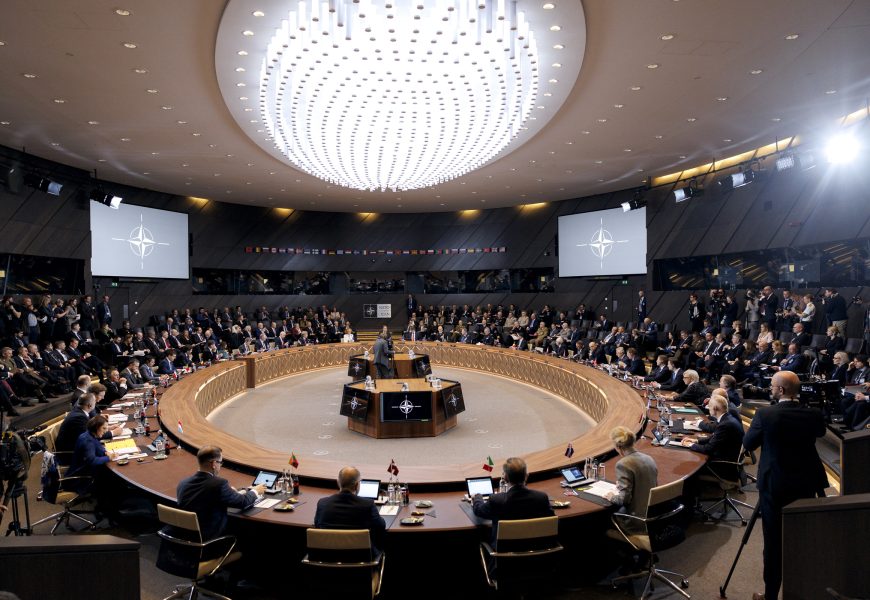
Minister Anušić: Croatia Allocates 2.1 Percent of GDP to Defence, Equips the Croatian Armed Forces and Introduces Basic Military Training | Photo: NATO
Minister Anušić: Croatia Allocates 2.1 Percent of GDP to Defence, Equips the Croatian Armed Forces and Introduces Basic Military Training
Anušić at the NATO Defence Ministers’ Meeting: Croatia is Actively Strengthening its Defence Capabilities
Deputy Prime Minister of the Republic of Croatia and Minister of Defence Ivan Anušić participated today, 12 February 2026, in Brussels at the meeting of the North Atlantic Council (NAC) in the format of Defence Ministers, as well as in the meetings of the NATO–Ukraine Council (NUC) and the Ukraine Defence Contact Group (UDCG).
At the meeting of NATO defence ministers, topics like additional strengthening of NATO’s deterrence and defence agenda, improving the allied forces’ combat capabilities, and providing additional support to Ukraine were discussed.
“Croatia arrived at the first NATO Defence Ministers meeting, having met the NATO goal of allocating 2.10 per cent of GDP to defence. We reached that goal in 2025. At today’s meeting, it was confirmed that all NATO member states have achieved defence expenditure of at least 2% of GDP. Croatia is exceptionally active in strengthening its defence capabilities and raising the level of security in these complex geopolitical circumstances. The Croatian Armed Forces are undergoing the most extensive modernisation in the last thirty years. We are constantly improving the standard of our personnel, and we have reintroduced basic military training, with the first conscripts arriving at their barracks on 9 March,” said Minister Anušić.
The minister emphasised that the introduction of mandatory basic military training represents a significant step forward in enhancing national readiness and security.
“Many countries have announced the introduction of military training; some have implemented this project, some are in the process of doing so, and others are yet to begin. It is important to emphasise that Croatia has, within a relatively short period of time, successfully implemented the Mandatory Basic Military Training Project, and the Croatian Parliament has adopted the required legal framework. The conscripts will begin their service in barracks in Knin, Slunj, and Požega on 9 March,” Anušić said.
When talking about readiness, the minister added that a key topic of discussion is Europe’s readiness to rely more on its own forces in the future when it comes to defence matters and the development of defence capabilities, while naturally continuing to include the support of the United States.
Minister Anušić also highlighted the importance of preserving security and stability in Southeast Europe, which must remain a priority in maintaining the stability in this part of Europe.


